There is always a moment during a baptism that doesn’t get photographed properly.
It’s not the ritual, not the gathering, not even the carefully planned celebration that follows. It’s something quieter—the way the room pauses, the way the child is held, the way every person present understands that something meaningful is happening even if it cannot be fully explained.
That moment doesn’t last long, but it carries a weight that stays with everyone in the room.
And once the day ends, something subtle begins to shift. The question is no longer about what happened, but about what actually remains from it in a way that feels real and present.
People don’t struggle with baptism gifts because they lack options.
They struggle because they understand the significance of the moment they are stepping into. A godparent is not just giving something—they are expressing a role that continues for life. A grandparent is not simply choosing a keepsake—they are marking a moment they will carry emotionally for years.
Traditional gifts such as engraved baptism crosses, keepsake boxes, and personalised christening gifts have carried this responsibility across generations. They represent continuity, belief, and care.
And that has never been the issue.
The intention behind gifting has always been strong.
What shifts is not the meaning, but how often that meaning is seen.
Many gifts are deeply appreciated in the moment. They are opened, admired, and understood. But as time moves forward, they often become part of storage rather than part of daily life.
They are kept safely, but not always seen regularly.
That difference – between being preserved and being present – is where a new kind of thinking is quietly emerging.
Because what we see often becomes what we remember most easily.
There is a certain kind of object that makes people pause.
It is not necessarily expensive or decorative. It is not loud or attention-seeking. But it feels specific, almost like it belongs to a story that hasn’t been explained yet.
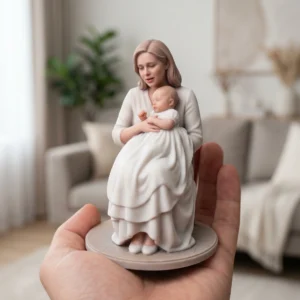
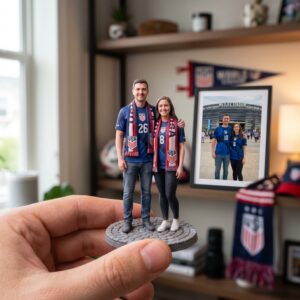
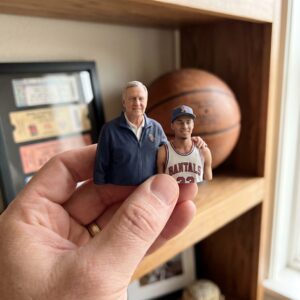
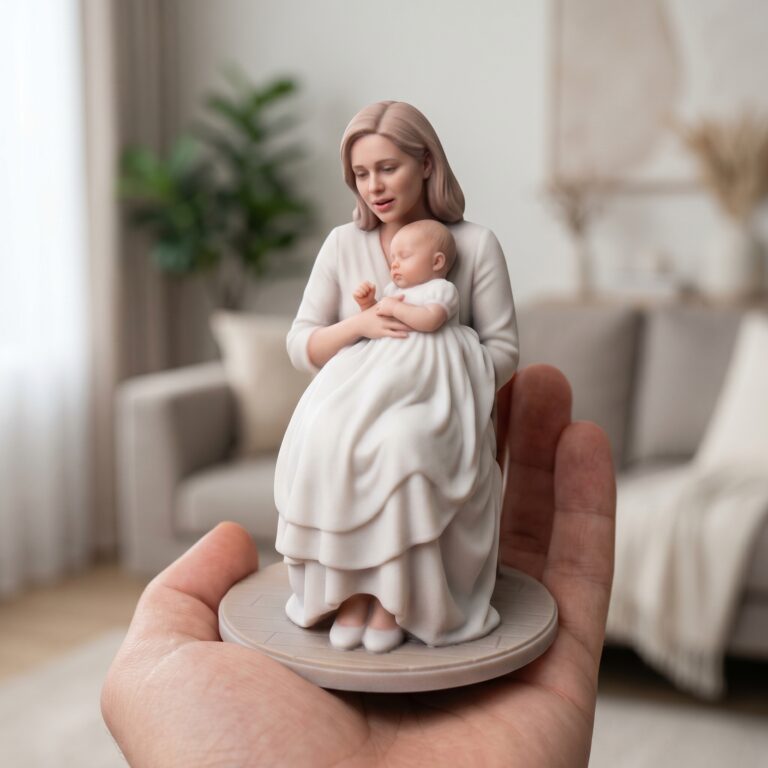
A small figurine on a shelf can create that reaction.
Someone notices it, looks again, and asks a simple question:
Who is that?
That question is where something deeper begins.
The personalised gifting industry is growing rapidly, projected to reach over $138 billion globally by 2030.
This growth is not being driven by traditional forms of personalisation like engraving or printing names. It is being driven by a shift toward creating objects that feel more closely connected to real people and real moments.
Personalisation is no longer just about adding identity.
It is moving toward representing it.
Instead of placing a name onto an object, people are beginning to choose objects that reflect a person in a more direct and visible way.
For a long time, gifts have been symbolic.
They represented faith, celebration, or memory through familiar forms. That is why items like Christening cake toppers or engraved pieces continue to hold value—they connect to tradition.
But now, alongside those, there is a growing interest in objects that feel more specific.
Objects that do not just represent the occasion, but reflect something about the individual within it.
That shift is where figurines are quietly re-entering the conversation.
Figurines have always existed, but historically they represented ideas rather than individuals.
Today, that is changing.
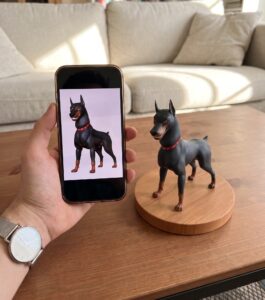
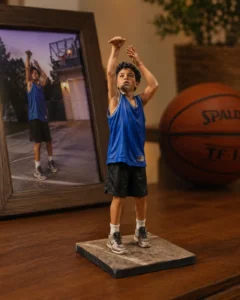
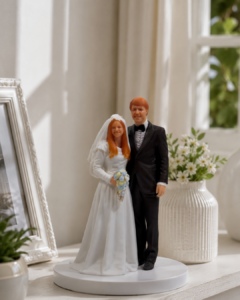
With advancements in digital sculpting and full-color 3D printing, figurines are becoming more precise, more lifelike, and more personal. They are no longer limited to generic designs or artistic interpretations.
They can now reflect real people at real moments.
And that is where they begin to align naturally with occasions like baptism.
The3DMe operates within this evolving space, not by replacing tradition, but by adding another layer to it.
The process begins with photographs—typically from the baptism day itself. These images are not treated as simple references, but as the foundation for creating a three-dimensional interpretation of the moment.
From there, digital sculpting takes place. Artists carefully build the form by studying facial features, posture, and clothing details, ensuring that the figurine reflects the individual rather than a template.
The most defining stage is the production method.
Using full-color resin 3D printing, the figurine is created with embedded color and depth. This is not a painted surface layered afterward. It is a process where tone, texture, and detail are integrated during printing itself.
This is what defines the full-color resin truth.
It allows for a level of realism that feels grounded, not exaggerated, and ensures that the final piece maintains its visual integrity over time.
Each figurine is then refined and prepared as a display-ready piece, designed to exist naturally within everyday spaces rather than being stored away.
What stands out is not just the result, but the way the process respects the individuality of each piece.
There is no catalog of predefined faces or poses. Each figurine is built from scratch based on the specific person and moment being represented.
The focus is not on mass production, but on accuracy and presence.
This creates a different kind of relationship between the object and the person receiving it. It does not feel interchangeable or generic. It feels tied to a specific story.
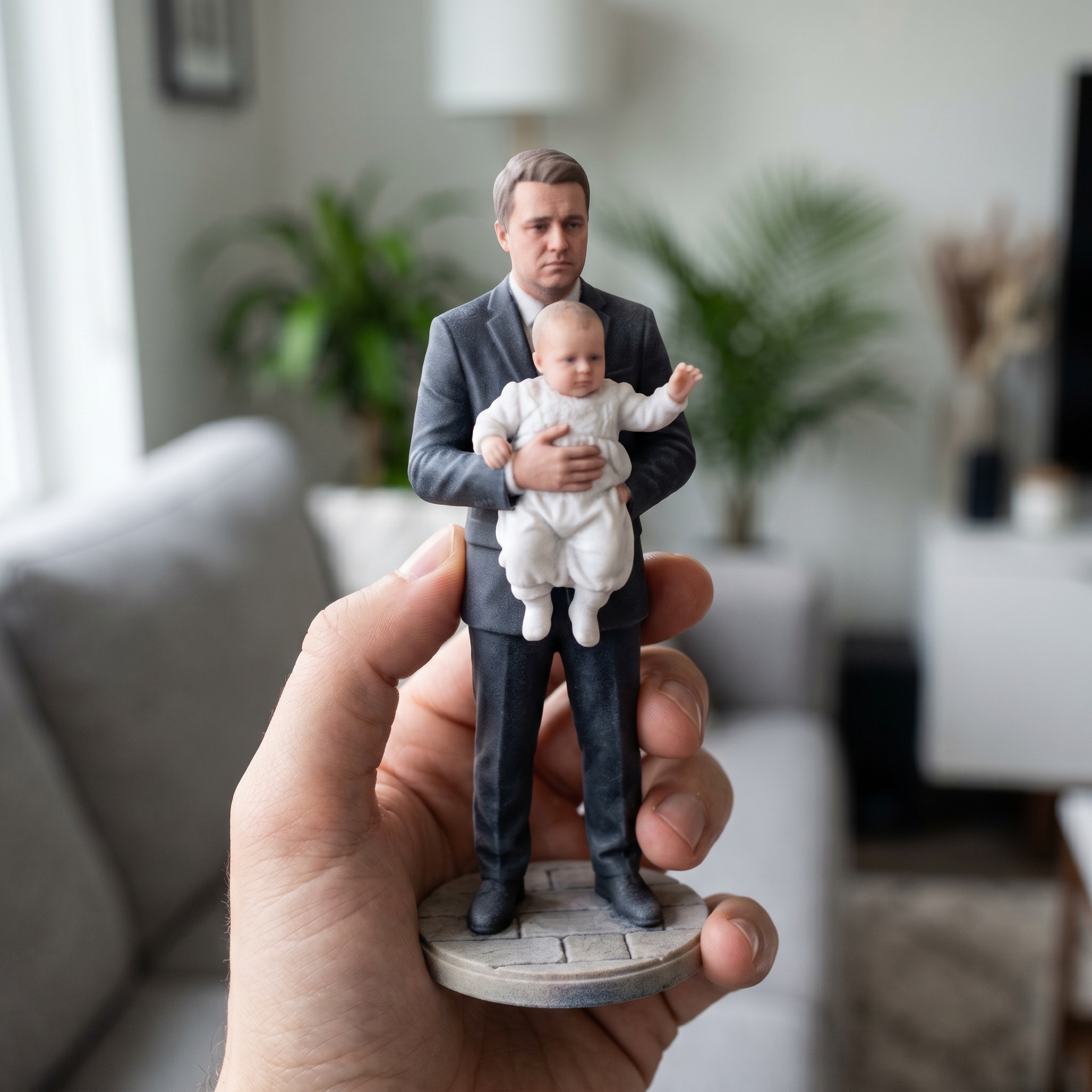
The way people respond to these figurines is noticeably different from how they interact with most gifts.
They don’t need explanation to be understood, yet they naturally draw people into conversation. Instead of being used once in a while, they stay visible, becoming a familiar part of everyday surroundings.
Over time, they become less of a “gift” and more of a familiar presence within the space.
What this reflects is not a change in tradition, but a change in how people relate to it.
Modern families are more expressive. Emotional connection is more openly acknowledged. Roles such as godparents and grandparents are experienced more actively rather than symbolically.
And as people change, the way they choose to express meaning also evolves.
Not dramatically, but gradually.
Personalisation is moving in a clear direction.
Meaning is no longer something simply added onto objects. Instead, it is being built into them – shifting from things we read and store to things we can actually see and live with every day.
This shift is not limited to one category or occasion. It is part of a broader change in how people engage with moments that matter.
Baptism has always carried meaning.
That has never changed.
What is changing is how people choose to interact with that meaning after the day has passed.
If you explore baptism gift ideas 2026, you will still find tradition, symbolism, and familiarity. But alongside them, you will begin to notice something else—objects that feel more closely connected to real moments and real people.
Not as replacements.
But as reflections.
To explore more, you can visit our homepage, browse our custom figurine collection, or read our related blog on personalised keepsakes.
You can also see how others are interpreting these moments by exploring our Instagram.
Sometimes, the most meaningful changes are the ones that quietly become part of everyday life.