Every June, the awareness campaigns start. Posts get shared. The message is consistent: men need to talk more. That message is not wrong, but it is incomplete. For millions of men across the United States and Canada, the real barrier is not a shortage of opportunity to speak – it is the absence of a framework through which they know how, and the absence of anyone in their lives who understands that speaking is not always the place to start.
The silence is not apathy. It is architecture.
Most men are not refusing to open up.
They were never taught how to do it in the first place.
In Canada, the Canadian Men’s Health Foundation‘s most recent national survey found that 23% of men are at risk of moderate to severe depression, 50% lack sufficient social support networks, and 67% have never sought professional mental health support. These numbers do not belong in a sidebar. They are the center of what Men’s Mental Health Month is actually asking us to look at.
Traditional masculinity norms – emphasizing emotional suppression, self-reliance, and stoicism – contribute to a culture where emotional expression is seen as weakness. This suppression actively worsens anxiety and depression by cutting men off from the processing they need to recover. This is not a character flaw embedded in men. It is a behavioral pattern trained into them from the time they were old enough to be told to stop crying.
A 2024 study by the Survey Center on American Life found:
The same study found that 17% of men now have zero close friends – a more than fivefold increase since 1990. Zencare
According to Gallup’s 2025 survey, one in four young American men between 15 and 34 feel lonely a lot of the day. A 2023 Equimundo study found that two-thirds of young men aged 18 to 23 said they felt that no one really knows them. That last line is worth reading again.
Two-thirds of young men. No one really knows me.
Research also shows that men with few or no close friends are up to 60% more likely to report feeling depressed than those with broader social circles. And 74% of men say they would first turn to a spouse or partner for emotional support – meaning men who are single, widowed, or in fractured relationships often have no anchor at all. The loneliness is not just emotional. It is structural.
Here is where most mental health conversations for men hit a wall. The default advice is to speak – to a therapist, to a friend, to someone. That advice has genuine value. But it assumes that verbal expression is the primary gateway to emotional processing. For a large portion of men, that assumption is clinically incorrect.
Traditional masculine socialization frequently limits men’s ability to identify and articulate emotions – a condition researchers call normative male alexithymia.
This does not mean men feel less.
It means they have been conditioned to process feeling through action, through structure, through doing – not through speaking.
Research shows that men who develop flexible coping strategies:
Experience meaningfully better mental health outcomes than those relying on talk therapy alone.
This is not an argument against therapy.
It is an argument for a wider toolkit – one that meets men in the physical, tangible world they already occupy, rather than asking them to enter a verbal world they have been discouraged from since childhood.
Humans have used physical objects to manage emotion for as long as objects have existed.
None of this is sentimentality.
It is psychology, and it is thoroughly documented.
Research published in the Journal of Material Culture confirms that objects function as psychological attachment figures, providing comfort and security in the absence of loved ones.
Object attachment stems from a deep-seated psychological need for emotional support, one that other people cannot always fulfill.
Research on emotional support objects has found that holding or interacting with a meaningful object can trigger the release of oxytocin – the hormone linked to bonding, trust, and calm. The physical interaction alone produces a measurable effect on the body’s stress response. That is not metaphor. That is neurochemistry, and it works the same way in men as in anyone else.
From childhood separation anxiety to adult grief, trauma, and burnout, tangible objects provide stability, safety, and grounding at times when nothing else feels solid.
And more.
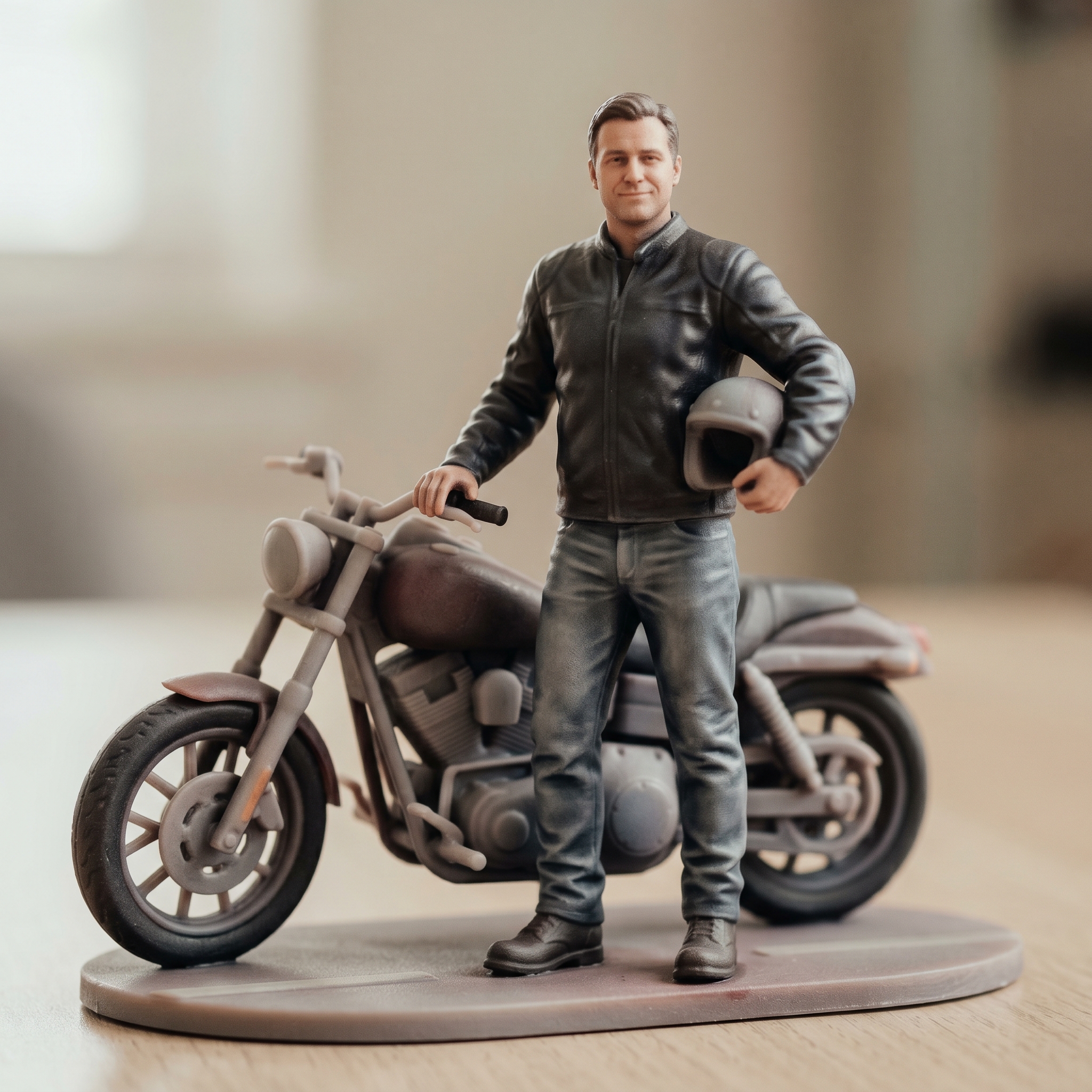
Miniature therapy, also called sandplay therapy, is a clinical tool used by psychologists to help both children and adults externalize inner conflicts. Clients choose small figures representing their feelings and arrange them in a constructed scene. The therapist does not ask them to explain. The world speaks for them
Rooted in Jungian psychology, the use of miniatures in counseling allows clients to:
Which are otherwise difficult to access verbally. A person who cannot say “I feel lost” may be able to place a figure that embodies that feeling. The distance is the point. The miniature carries the weight the person cannot yet hold directly
Therapists have identified working with miniature figurines as a form of mental restoration, particularly effective for those dealing with burnout and depression. It offers a small domain of control in a life that feels otherwise chaotic – a space where something is manageable, purposeful, and entirely yours.
This is not fringe thinking. This is practiced, evidence-backed clinical methodology.
Suicide rates are highest among men aged 45 to 75, with workplace pressure, financial stress, and relationship strain driving much of the struggle. This period often marks a deep transition in identity.
Midlife quietly removes the structures men rely on—careers shift, children grow up and leave, and the body begins to change. The roles that once defined purpose become uncertain.
Without a strong internal sense of self, separate from what he produces or provides, that uncertainty can become dangerous. Many men report confusion about their role, a loss of purpose, and increasing isolation. One underexplored answer is the identity object – a physical anchor to who a man actually is, not just what he does.
What that can look like in practice:
These are not decorations. They are declarations of identity – quiet reminders of who someone is when everything else begins to shift.
Sometimes all it takes is being seen. A quiet reminder that someone is not invisible can make a real difference.
For those who don’t know what to say, a physical object can say it without words: I saw you. You matter. Even someone who never asks to be remembered can still be given something that remembers them.
It sits quietly, asks for nothing, and over time, shifts something words often cannot.
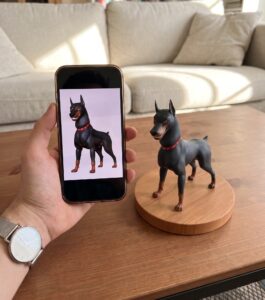
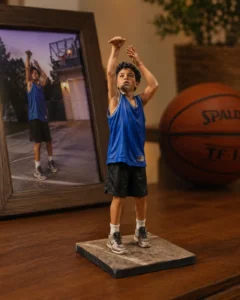
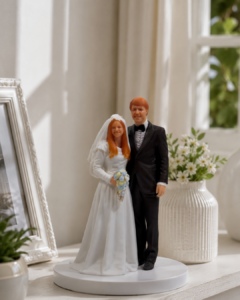
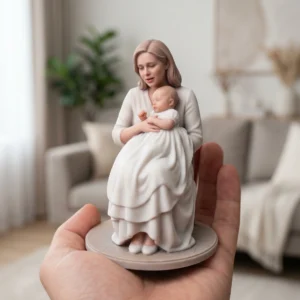
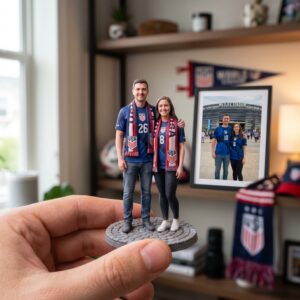
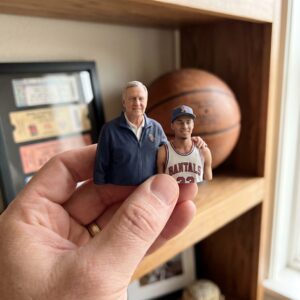
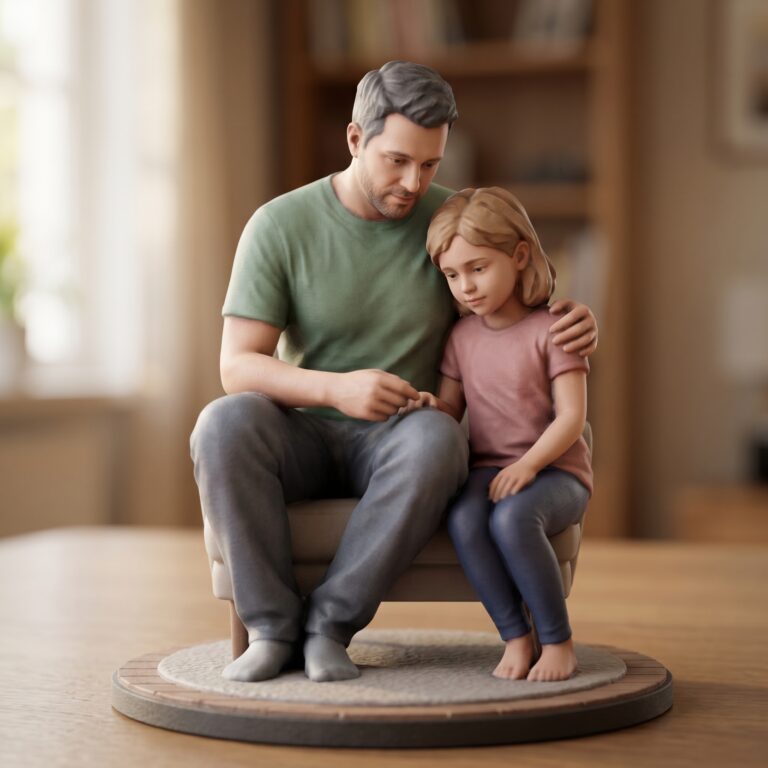
At The3DMe, we create custom full-color resin 3D figurines from the photos you submit. Each piece is digitally sculpted feature by feature until the person in the sculpture is unmistakably the person in the photograph. The likeness isn’t approximated—it’s pursued until it feels right. Once approved, the figurine is printed and delivered in three simple steps: submit your photos, review your sculpt, receive your figurine.
We want to be honest about why this piece exists. The data is real, and it’s difficult to ignore. Many men are struggling quietly, and the tools most people suggest – conversation or professional help—are often the ones they’ve been conditioned to avoid.
We believe physical objects matter. Surrounding yourself with who you love, and who you are, in a permanent, tangible form isn’t just a product category. For some, at certain points in life, it becomes something closer to necessary.
That’s why we’re writing this instead of simply running a promotion. We aim to be more than a memory brand – something closer to an identity brand. One that understands the people we keep around us, even in miniature, quietly shape how we see ourselves.
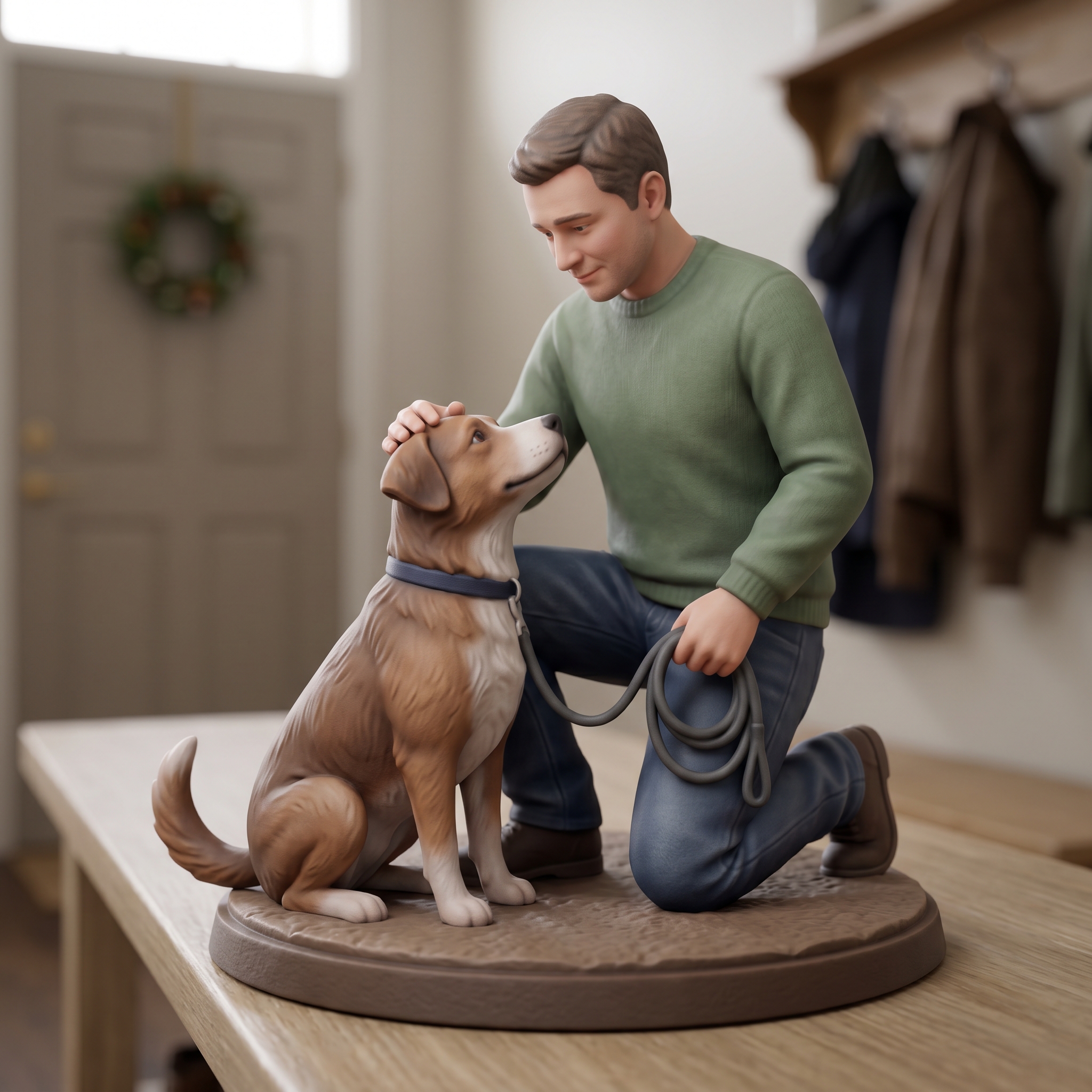
Men’s Mental Health Month is thirty days on the calendar. The silence it is trying to address has been accumulating for generations. It will not be broken by a single campaign or a single hard conversation. It will be broken in pieces, quietly, by the small things that accumulate into a life that feels worth protecting.
Men do not need more pressure to talk. They need more tools that meet them where they already are
Men do not need more pressure to talk. They need more tools that meet them where they already are.
The small things are not small. They may, in fact, be everything.
If you want to understand how powerful those small things can become, look at the moments people choose to preserve. You can see it in the way others have held onto what matters – real stories, real people, real memories – shared through our Instagram.