A moment before the gift is chosen
There’s always a pause before a meaningful gift.
Not the rushed kind — but the quiet moment where you ask yourself a harder question:
Will this still matter years from now?
Birthdays pass. Anniversaries stack quietly on calendars. Weddings blur into photographs. Most gifts are opened, admired, and eventually stored away — their meaning fading faster than the memory they were meant to represent.
But every once in a while, a gift does something different.
It never settles into the background or waits for a moment of use. Instead, it remains present.
And long before printing names on mugs or photos on frames, this was how humans chose to remember one another — through form, shape, and sculpture.
This is the story of how personalized custom 3D figurines didn’t appear out of nowhere — and why they may be the most meaningful evolution modern gifting has seen.
Long before personalization meant adding text, it meant creating presence.
In ancient cultures — from early Egyptian dynasties to Roman households and East Asian traditions — likeness mattered. People carved figures not for decoration, but for remembrance. A sculpted form carried posture, expression, identity. It was a way of saying: this person existed, and they mattered.
There were no shortcuts.
No copies.
No mass production.
Every personalized object required intention.
Personalization once meant capturing who someone was — not labeling what something belonged to.
These sculptural gifts weren’t practical. They weren’t cheap. And they weren’t disposable. They were made to last — and to outlive the moment that created them.
As time moved forward, convenience reshaped meaning.
The industrial era introduced engraving. The 20th century normalized printed photos. Names appeared on mugs, frames, keychains, plaques. For the first time, personalization became accessible — but it also became surface-level.
A printed name doesn’t carry posture.
A photo doesn’t carry form.
A flat image doesn’t share space with you.
It represents a moment, but it doesn’t exist within it.
And yet, for decades, this was the best option available. So we accepted it. We called it personal. We wrapped it with care.
Until technology quietly caught up with something humans had always wanted.
At its core, what is a 3D figurine if not a return to how personalization began?
A 3D figurine does not attach an image to an object.
It does not print meaning onto a surface.
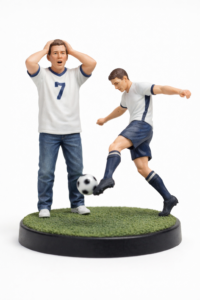
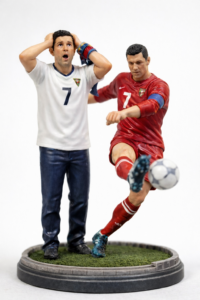
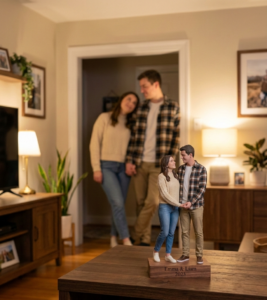
The process digitally sculpts and physically forms a representation that captures dimension, posture, expression, clothing, and presence. It occupies space the same way a person once did in that moment.
Unlike photos, which you look at, a figurine exists with you.
This distinction matters more than it seems.
Psychological research shows that physical objects trigger stronger emotional recall than flat images because they engage spatial memory and object-based cognition.
That’s why personalized 3D figurines don’t feel like décor.
They feel like memory, made visible.
For most of history, sculpted likenesses were rare for a reason.
The process often stretched across months and relied on highly skilled artisans. As a result, it remained costly, exclusive, and inaccessible to most people.
Only royalty, religious institutions, or the very wealthy could afford to preserve identity in physical form. Everyone else relied on stories, sketches, or — eventually — photographs.
Sculptural memory was a luxury.
But technology doesn’t just create convenience. Sometimes, it restores meaning.
The evolution of digital sculpting changed everything.
Instead of starting with stone or clay, modern artists begin with reference photos. Advanced sculpting tools allow for precise facial structure, posture alignment, and proportional accuracy — while still leaving room for human interpretation.
This shift did something powerful:
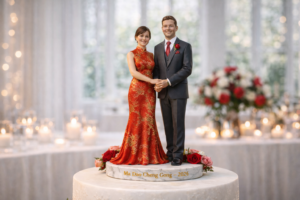
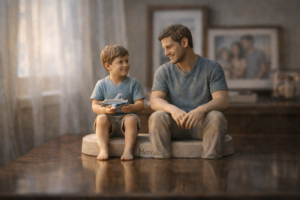
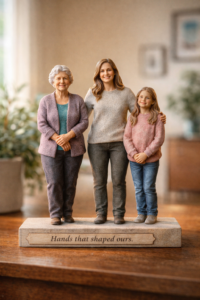
Suddenly, custom 3D printed figurines weren’t reserved for museums or monuments. They became possible for couples, families, pets, and individuals who simply wanted to preserve a moment that mattered.
Technology didn’t replace artistry.
It amplified it.
Something unexpected happened in the last few years.
Not in galleries.
Not in museums.
But on screens.
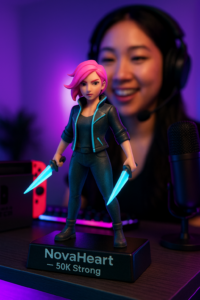
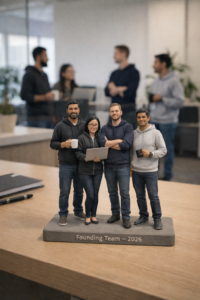
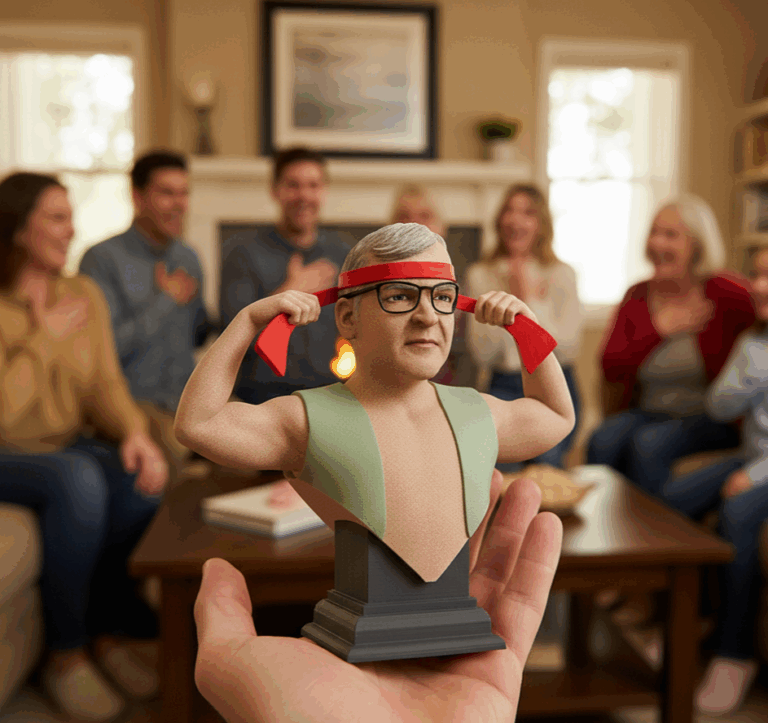
A wave of AI-generated figurine imagery — most notably the Nano Banana trend — flooded social media feeds. Ordinary people uploaded photos and saw themselves transformed into stylized 3D figurines: standing confidently, posed like collectibles, rendered with depth and character that no flat photo could express.
For many, it was the first time they felt what a figurine could be.
Not as a toy.
Not as novelty.
But as identity, translated into form.
People shared these images not because they were perfect — but because they were dimensional. They showed personality. Presence. A version of themselves that felt strangely more real than a photograph ever had.
And something subtle shifted.
Suddenly, millions of people could visualize themselves as sculpture — on a desk, beside a computer, near a window, existing quietly in their everyday space. The idea of a 3D figurine stopped feeling distant or old-fashioned. It felt modern. Personal. Expressive.
But there was also a gap.
These AI-generated figurines lived only on screens. They remained confined to screens, never able to be held, thoughtfully displayed, or grow into part of a real, lived environment.
Yet the seed had been planted.
The Nano Banana moment didn’t create the desire for sculpted memory — it revealed it. It reminded people that form communicates something photos cannot: presence.
And once people saw that possibility, the question naturally followed:
What if this could exist in real life?
That question is why modern interest in personalized custom 3D figurines surged — not as a trend, but as a realization. A realization that sculpture was never outdated.
It was simply waiting for the right moment to be understood again.
Today’s gifting culture is changing — and subtly.
People are buying fewer things, but choosing more carefully. Meaning is beginning to outweigh novelty. Longevity is replacing trendiness. Objects are being asked to hold emotion, not just symbolize it.
That’s why personalized custom 3D figurines are no longer seen as novelty items — but as modern heirlooms.
A mug gets used.
A frame gets glanced at.
A figurine gets remembered.
Material matters — not technically, but emotionally.
Among modern materials, full-color resin figurines have become the standard for meaningful preservation. Not because they’re flashy — but because they’re faithful.
Full-color resin allows:
More importantly, resin carries weight — physically and symbolically. It feels permanent. Intentional. Worth keeping.
When people choose resin, they aren’t choosing durability alone.
They’re choosing continuity.
Most gifts are designed for use.
And once they’re used enough, they disappear.
A mug chips.
A print fades.
A frame gets replaced.
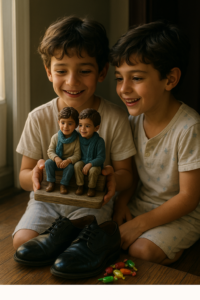
But a figurine doesn’t compete for utility. It doesn’t need to justify space; it simply exists—quietly, constantly, without demand. Over time, people return to it, carry it forward as life shifts, and keep it long after trends disappear.
Form doesn’t ask for attention.
It earns presence.
There’s a difference between celebrating an occasion and preserving it.
Weddings, anniversaries, milestones — they aren’t about the day. They’re about what remains after the day passes.
This is where personalized custom 3D figurines have found their place.
Not as replacements for photos — but as companions to memory.
They capture not just how someone looked, but how that moment stood in time.
At some point, curiosity turns into intention.
This is where The3DMe exists — not as a printing service, but as a memory-preservation studio that understands why form matters.
Using professionally guided digital sculpting and full-color resin, The3DMe transforms real photos into sculptural representations that feel human, balanced, and emotionally accurate.
The process is intentional, not automated.
Interpretive, not mechanical.
Crafted to preserve meaning — not just likeness.
Personalization has always evolved toward fidelity.
From names → to photos → to form.
What we’re witnessing now isn’t a trend — it’s a return. A return to presence. To dimensional memory. To gifts that don’t need explanation.
Personalized custom 3D figurines don’t announce themselves.
They don’t need justification.
They simply remain.
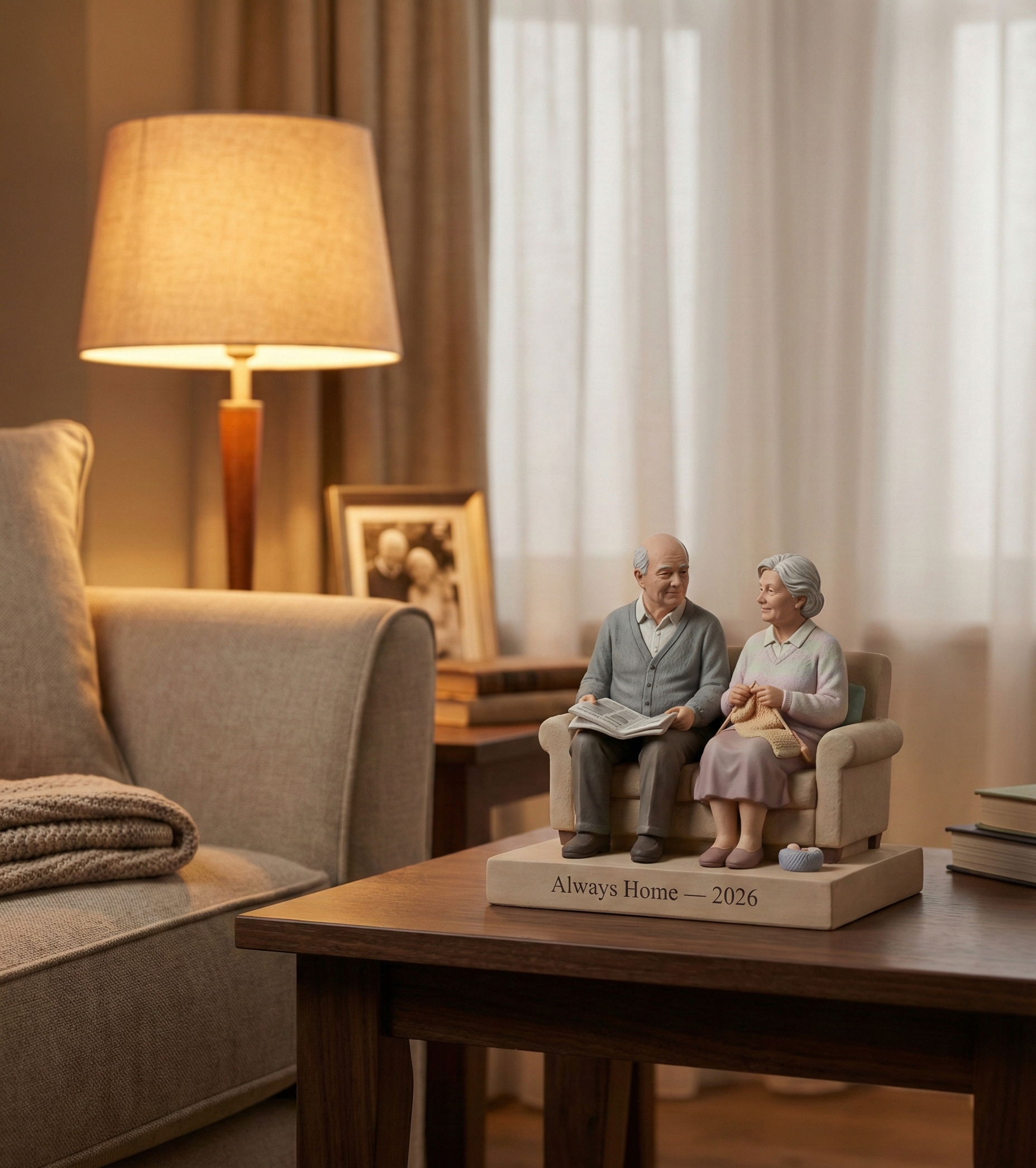
Years from now, the details of today will blur.
Dates will fade. Photos will age. Stories will soften.
But form endures.
A figurine doesn’t remind you what happened. It reminds you who mattered.
And when the time comes to choose a gift that shouldn’t disappear — not into drawers, not into storage, not into memory — the answer often isn’t louder or newer.
It’s deeper because someday, someone will look at it and feel something instantly.
Not because it was customized.
But because it was preserved.
If you’re ready to explore how a moment can become form — how memory can become presence — that journey begins quietly.
And it begins here.
Some gifts are opened once. Others are remembered forever.
Follow and explore real stories on Instagram.
Join the families and couples turning memories into art — and share your story with #The3DMe.