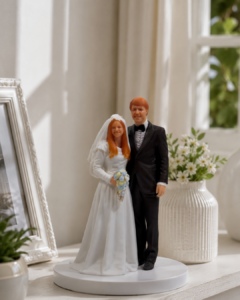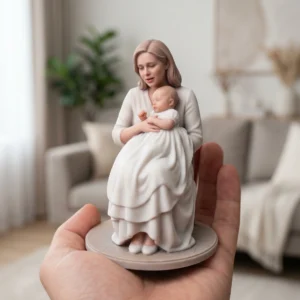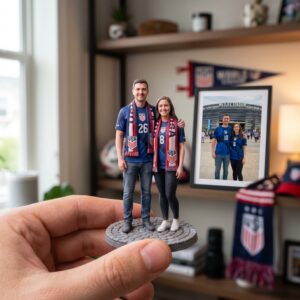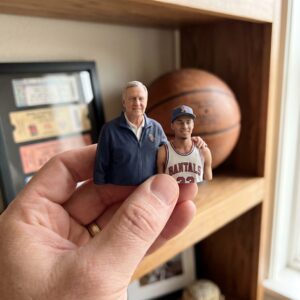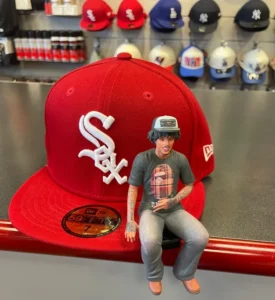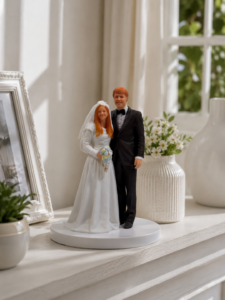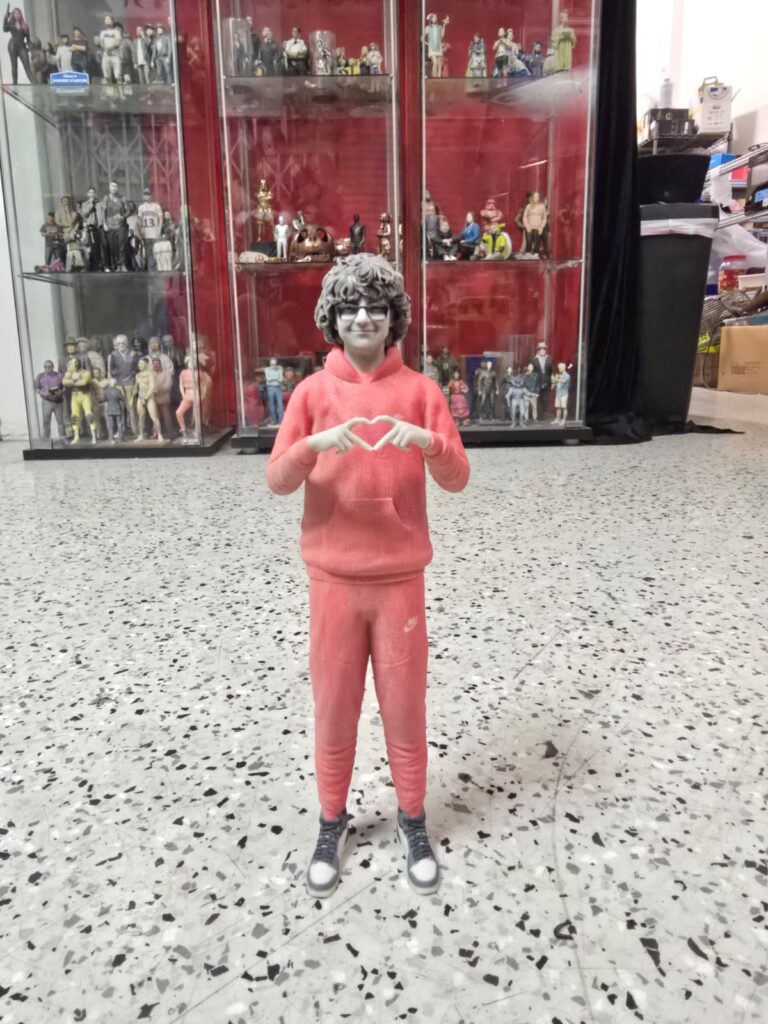
The intersection of personalization and technology has reshaped how people give meaningful gifts. In the last few years, demand for customized products – from engraved jewelry to bespoke prints – has accelerated, with many consumers now expecting something unique and long-lasting. Within this trend, 3D printing gifts have emerged as a distinctive segment, offering keepsakes that capture people, pets, and moments in three dimensions.
Globally, the 3D printing market is expanding rapidly. The industry was valued at over $30 billion in 2025 and is expected to grow further in 2026 as hardware, materials, and software improve. This growth has driven more options for consumers – particularly in Western and European markets – where personalized gifting and experiential products continue to gain traction.
Whether for birthdays, weddings, pet memorials, or corporate awards, 3D printed figurines stand out because they offer tangible memories in a way traditional photos cannot. But as the market matures, so do the choices buyers must make: which technologies, materials, and vendors align with your expectations?
At its core, a 3D printed gift is a custom object created from a digital 3D model and materialized through additive manufacturing. In the consumer space, this usually translates to:
The key difference from generic trinkets lies in customization: buyers want an object that visually and emotionally reflects someone they care about. This demand has driven two fundamentally different creation methods: photo-based modeling and 3D scanning.
How It Works
Buyers submit multiple photos – typically front, side, and optional angled views – using a smartphone or camera. A digital artist builds a 3D model based on these images. The process includes:
A major aspect of companies like The3DMe is that they provide approval renders or previews before final printing. If the likeness doesn’t meet expectations, adjustments can be made. This crucial step reduces surprises and increases customer satisfaction – something many buyers online explicitly appreciate.
Pros and When They Matter
Global Accessibility
Anyone with clear photos can order – no need to visit a physical location. This is vital for buyers outside major cities or regions without scanning booths.
Creative Customization
Because the model is artist-built, you can choose:
This is why buyers on forums often comment that photo-to-model services feel more “personal” or “story-driven.”
Approval and Correction
The ability to request changes after preview renders is a meaningful advantage; it gives buyers control over how the artist interprets features or clothing.
Cons and When They Matter
Photo Dependency
If photos are low quality (blurry, poorly lit, or limited angles), the final figurine may lack detail. This is not a fault of the technology, but a dependency buyers must understand. Reliable services mitigate this by:
Interpretation Variability
Because an artist models from photos, subtle interpretation differences can occur. Some buyers on Reddit have noted instances where facial features look a bit different than expected when photos aren’t clear or comprehensive.
3D scanning captures the subject’s true geometry using:
This produces a highly accurate 3D mesh based on real measurements.
Why Some Buyers Prefer Scanning
Limitations to Consider
Real Buyer Feedback: Some buyers on consumer forums mention that while scan-based figurines had high physical accuracy, they lacked the emotional nuance or stylized details they wanted (e.g., favorite outfit that wasn’t worn during scan).
| Factor | Photo-to-3D Modeling | 3D Scanning |
|---|---|---|
| Accessibility | High — global online | Medium to Low — local studios/events |
| Creative Customization | Excellent — choose pose/outfit | Limited — captures only scanned pose |
| Geometric Accuracy | Moderate — inferred | Strong — measured |
| Color & Detail | Strong with manual touch | Good — depends on lighting |
| Control Before Print | High (approval renders) | Moderate — depends on provider |
| Cost Transparency | Predictable online pricing | Studio fees + modeling |
| Best For | Personalized scenes, costumes, pets | Exact shape fidelity, body proportions |
Regardless of method, material choice influences durability and suitability:
Sandstone
Resin
Nylon
Buyers who want a lasting keepsake but also frequent handling often choose nylon. Those who prioritize color vibrancy for display pick sandstone or resin.
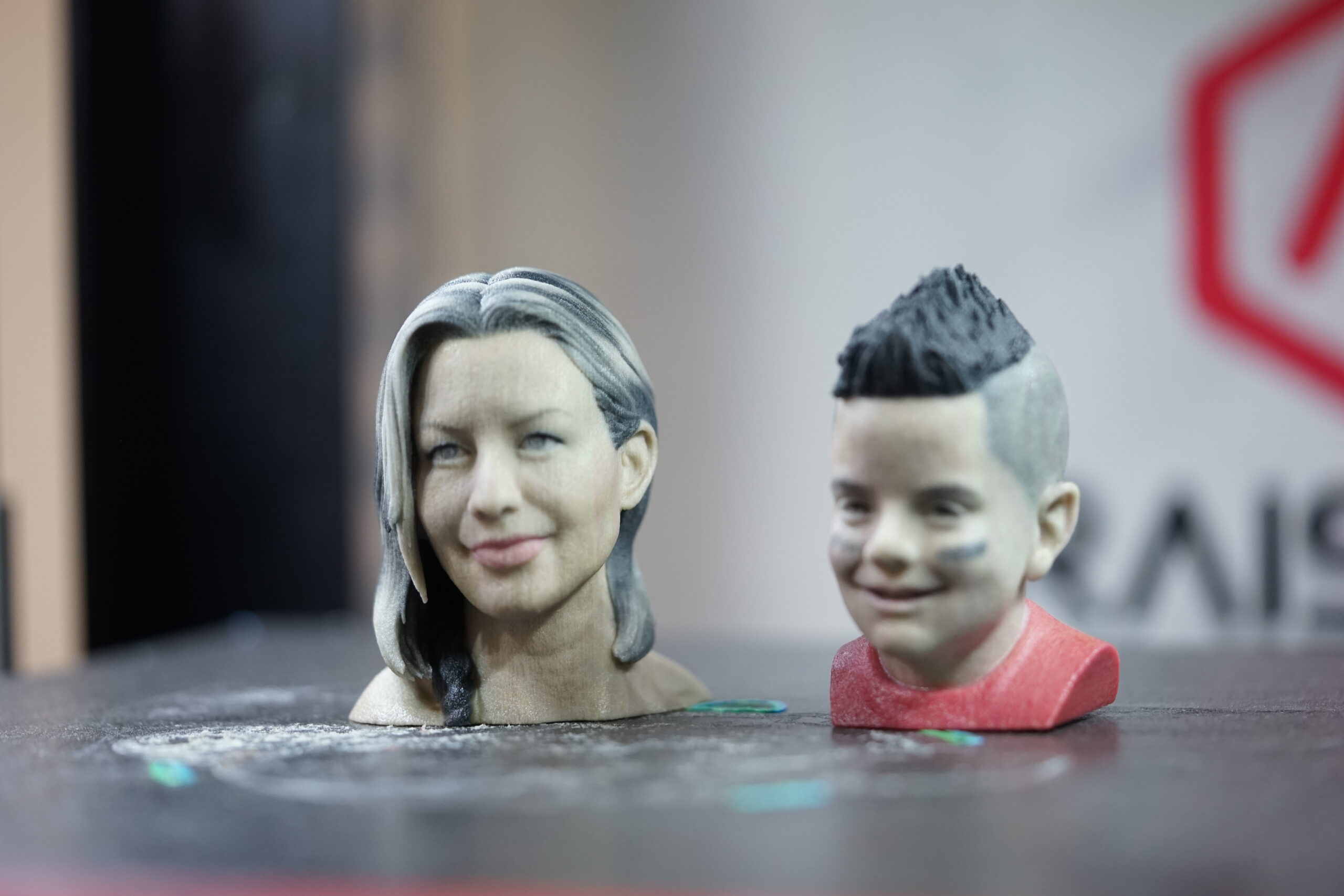
Typical price brackets in 2026 (varies by provider and region):
Scanning costs:
Scan booth or studio fees can add $50–$150+ on top of modeling and printing.
Photo-to-3D pricing:
More predictable — transparent online rates without extra travel or studio costs.
Many buyers mention on online that unexpected scanning fees were a surprise when booking through local studios — an important awareness point before ordering.
The3DMe is an example of a photo-to-3D figurine provider that emphasizes:
Crucially, The3DMe’s process reduces one of the biggest risks in photo-to-3D workflows: uncertainty. By giving buyers visual previews before printing, many reporting experiences online say they feel more confident that the final product will match expectations. This addresses a key pain point often discussed in Reddit threads about early figurine services missing facial details or proportions.
However, The3DMe does not claim universal superiority – it simply exemplifies how rigorous photo-derived modeling can be as reliable as possible when feedback loops and quality checks are in place.
Here are practical questions to guide your choice:
In 2026, 3D printing gifts have become a genuine way to personalize memories – and there’s no single “best” method.
Photo-based 3D figurines offer creative freedom, easy global access, and pre-print approvals.
3D scanning gives unmatched geometric accuracy for those who value precision and have access to scanning studios.
Your decision comes down to what matters most – detail, emotion, or convenience. Both paths lead to meaningful results when you understand their trade-offs.
To explore how photo-to-3D modeling works in real life, visit our How It Works page or discover real projects on Instagram.
Whatever method you choose, choose the one that makes your story last.