During the 2022 FIFA World Cup in Qatar, one of the most widely shared images did not involve a goal, a celebration, or a trophy lift.
It came after the match had ended.
Rows of seats slowly emptied. Stadium lights dimmed. The noise that had filled the arena dissolved into scattered footsteps and distant echoes. And yet, in sections of the stands, a small group of fans remained.
No one waited for autographs. No cameras were raised. They were busy cleaning.
Japanese supporters — methodically collecting trash, folding banners, and restoring order to a space that tens of thousands had just occupied — became a global symbol overnight. The act itself wasn’t new. They had done it in previous tournaments. But this time, something about it felt different.
It wasn’t just discipline. Nor was it only culture. It was about being seen.
For perhaps the first time at this scale, fans weren’t just part of the audience — they were part of the story.
And once that happens, something else begins to change.
Not immediately. Not visibly. But inevitably.
What people choose to remember — and how they choose to keep it.
For most of football history, fans existed in the background.
The stadium filled up. Energy took over the stands. The team had unwavering support. But they were not the narrative.
The narrative belonged to players, managers, and moments on the pitch.
That changed gradually — and then suddenly.
Social media amplified it. Global broadcasting captured it. Moments like Qatar 2022 accelerated it.
Fans were no longer anonymous. They became visible, shareable, identifiable. And most importantly, they became part of what people remember about the World Cup itself.
Once that shift happens, the role of a “souvenir” begins to feel incomplete.
Because a traditional souvenir does not capture participation.
It captures association.
To understand why this matters, you have to go back to 2018.
The FIFA World Cup in Russia was, economically, a massive success. Fans traveled in large numbers, stadiums were full, and spending surged across categories.
But buried inside that success was a pattern that only became clear afterward.
International fans spent over 1.3 billion euros during the tournament. Nearly 45 to 50 percent of that spending went into food, merchandise, and souvenirs. At the time, this was celebrated as enthusiasm. And it was.
But it also exposed a flaw.
Most of what people bought did not age well.
Jerseys were replaced with new seasons. Scarves lost relevance. Keychains and accessories were stored away, rarely revisited.
The memory of the World Cup remained powerful. But the objects meant to hold that memory did not.
There is a quiet but important difference between spending on a moment and preserving a moment. 2018 was dominated by the first. Fans reacted emotionally, purchased impulsively, and bought what was available. But once the event ended, a realization followed.
The experience was personal. The souvenirs were not.
That gap — between personal memory and generic objects — didn’t break the market. But it started reshaping it.
Then came Qatar.
Unlike previous tournaments, the 2022 World Cup introduced constraints. Travel was expensive. Accommodation was limited. Access was not universal.
This created two distinct types of fans. Those who attended — often with higher intent and higher spending capacity. And those who could not attend — but were equally engaged from afar.
Fans who couldn’t be there didn’t disengage. They adapted.
Matches moved to screens. Content was created. New rituals formed around the event. The World Cup became less about location — and more about connection.
If you cannot rely on being physically present, then what you take away from the event cannot depend on location either. It has to depend on meaning. And that shift is already visible in how people search, buy, and value products.
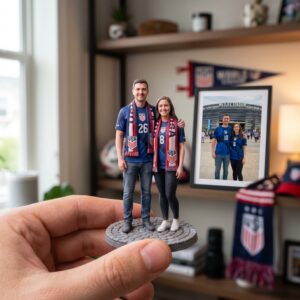
People are no longer just searching for “World Cup merchandise.” They are searching for personalized football gifts, custom fan figurines, miniature figurines of themselves at the World Cup. These are not generic queries. They are specific, intent-driven, and identity-focused.
The global sports souvenir and memorabilia market is growing rapidly — valued at over $38 billion in 2024 and projected to reach more than $110 billion by 2032. Meanwhile, the licensed sports merchandise market stood at nearly $38 billion in 2025, with steady annual growth driven in part by rising demand for personalized and custom products.
What this shows is not just growth. It shows direction.
Spending is not decreasing. It is becoming more selective.
There was a time when owning a player’s jersey or a team’s merchandise was enough. It signaled belonging.
But the next phase of fandom is more personal. It’s not about which team you supported. It’s about what your story was during the World Cup.
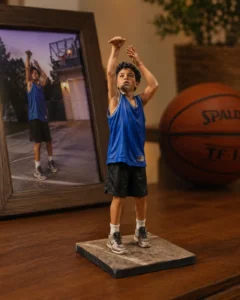
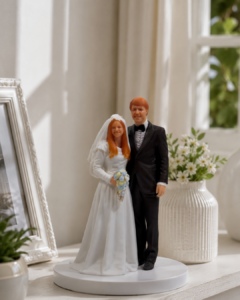
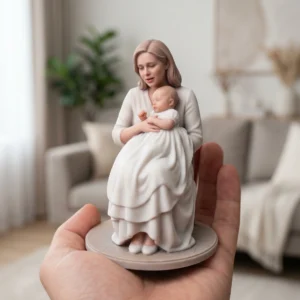
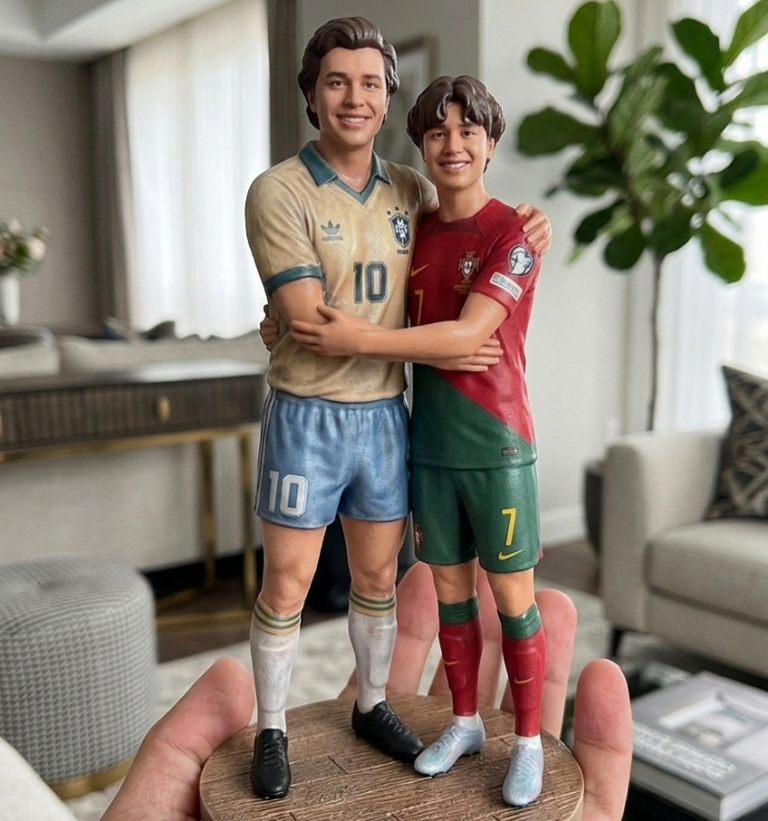
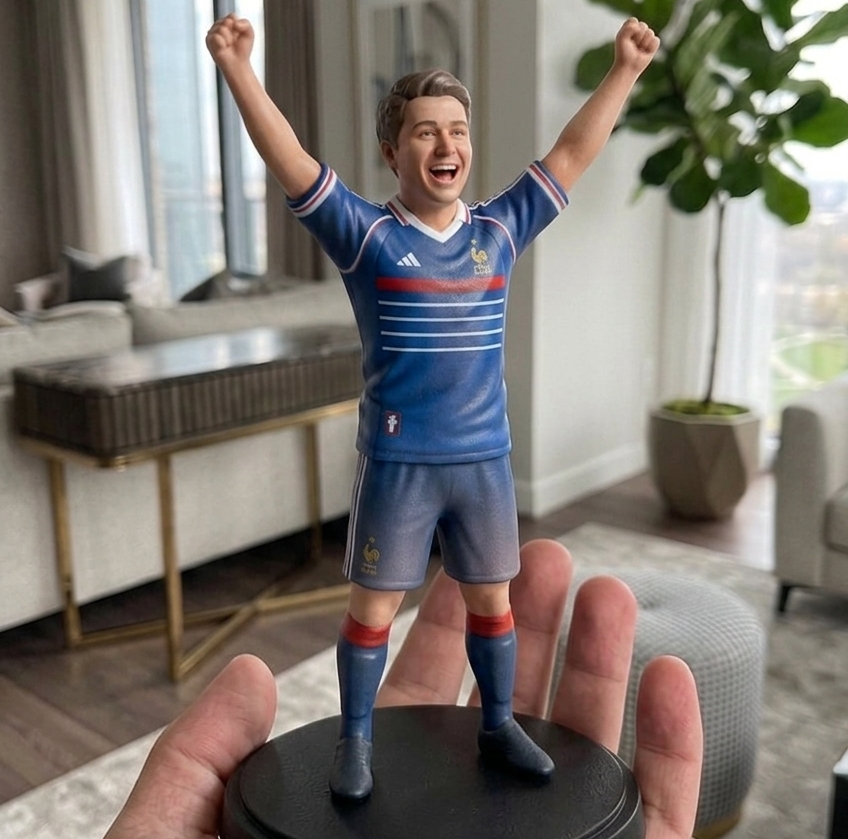
That is why formats like 3D figurines, custom fan figurines, 3D printed soccer figurines, and 3D Mini Figure from Photo are gaining relevance.
Because they do something traditional products cannot.
They represent the individual inside the experience.
Everything that has been building over the last two tournaments converges in 2026.
This scale creates opportunity — but also pressure.
Fan numbers climbed, spending followed, and choices expanded. But also more awareness.
Fans entering 2026 already understand what didn’t last from previous tournaments, what they missed, and what they actually want to keep.
Most brands in the souvenir market are built around scale. They optimize for volume, speed, and replication. They produce items that look the same regardless of who buys them. A jersey with your name on the back is still a jersey. A keychain with a stadium printed on it still looks like every other keychain from that stadium.
That model was never designed to preserve personal memory.
The3DMe was.
Here is what that actually means in practice.
It is useful to describe what the physical product is, because words like “figurine” can mean many things.
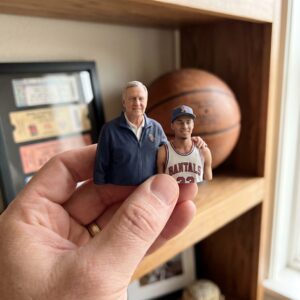
What arrives is a solid, full-color resin piece — roughly the size and presence of an object you would display on a desk or a bookshelf. It is not fragile in the way delicate ceramics are. It is not hollow. The color is embedded in the material, not painted on top.
When you pick it up, you feel the weight; up close, the detail reveals itself; and when someone recognizes you in it, the reaction isn’t polite. It is genuine.
“That reaction is the product. The figurine is just how it arrives.”
It’s easy to describe personalization as a trend. But that would miss the point.
This is not something new being added. It is something missing being corrected.
For years, fans have spent heavily on experiences that were deeply personal. But the products available to preserve those experiences remained generic. Now, that gap is closing.
The image of fans cleaning a stadium in 2022 was never really about cleanliness.
It was about ownership.
A quiet statement that said: we were part of this.
That feeling doesn’t disappear when the final whistle blows. It travels back home with every fan — shaping not just what they remember, but what they choose to keep.
By the time World Cup 2026 arrives, the question will no longer be:
“What should I buy to remember this?”
It will shift to something more personal, more precise:
“What actually represents my place in this moment?”
And that is where something like a 3D Mini Figure from Photo begins to feel less like a product — and more like a natural extension of the experience itself.
If you want to understand how this shift is already taking shape, you can explore how fans are turning memories into physical form through The3DMe or see real creations shared by the community on Instagram.
Because in the end, the most valuable thing you take home from the World Cup isn’t what was sold to you — it’s what still feels like yours.