You can tell within thirty seconds of walking into someone’s home whether they set their July 4th table or decorated it.
Decoration is transactional. Flags from the party supply aisle. A plastic tablecloth in red, white, and blue. Balloons that will deflate before the evening ends. The language of it is familiar precisely because no decision was made – just a category purchase.
Setting a table is different. It involves choices. It involves looking at what is on the surface and asking whether it reflects something true about the people who live here. The table that gets set rather than decorated tends to stop guests when they walk in. Not because it is louder, but because it is specific. Because it belongs to someone in particular.
That specificity is what separates the fourth of July table decor trends that matter in 2026 from the ones that do not. And in a year when America turns 250 – when the occasion is genuinely historic and people across the country are trying to honor it with more than a supermarket visit – the gap between the two kinds of hosts has never been more visible.
The America250 Commission, established by Congress in 2016, has spent years building a national program of events, parades, and cultural programming to mark the semiquincentennial. The scale of official recognition is unlike anything in living memory. That recognition, combined with the natural weight of a milestone this rare, has shifted how a meaningful portion of American hosts are approaching their gatherings this year.
They are not simply planning a cookout. They are planning a statement.
That shift is visible in search behavior. Queries like “non-cheesy Fourth of July decor,” “patriotic table setting without clutter,” and “unique Americana table centerpiece” have been growing in frequency, and what connects them is a common frustration – the gap between what the occasion deserves and what most party supply aisles offer.
This is where the fourth of July table decor trends for 2026 actually begin. Not with a product category. With an unmet want.
The word “Americana” has been stretched to cover an enormous amount of visual territory. Vintage diner kitsch. Country western fashion. Revolutionary War imagery. Folk art quilts. Red-white-and-blue everything, in every possible combination.
But as a genuine design language – the kind that generates real engagement on Pinterest boards and Instagram saves rather than just July 4th clearance sales – Americana aesthetic design inspiration has become something more restrained and more intelligent than its reputation suggests.
What distinguishes the Americana tablescapes that are actually being saved and recreated in 2026 is a quality that is easy to identify but harder to manufacture: the sense that someone made a decision about which part of this visual language they actually connect with, and then built the whole table from that decision outward.
A host who loves the texture of weathered wood and builds their table around a natural plank runner, cream ceramic plates, and a single flag-colored floral arrangement has made a decision. A host who covers every surface in star-spangled everything has not.
MRI-Simmons research on Fourth of July consumer behavior found that Gen Z consumers are 47% more likely than average to purchase holiday decorations for this occasion – but what Gen Z buys looks noticeably different from what older generations bought. It is not less patriotic. It is more deliberate. More aesthetically considered. More personal.
That is not a coincidence. It reflects a broader shift in how younger Americans approach identity expression through design. The table is not a tribute. It is a portrait.
“The table that stops guests is never the loudest one. It is the one that clearly belongs to someone. That specificity – a decision about what this space says about these people – is the actual differentiator in every Americana aesthetic that works.”
It is worth being specific here, because the word “curated” has become vague through overuse. What does a well-considered America 250 table actually look like, in concrete terms?
The color architecture is where most decisions happen. The patriotic palette – red, white, and blue – is given. The question is proportion. Tables that work visually in 2026 use one of those colors as a dominant base and treat the others as accents rather than equals. Navy as the primary ground, with cream or natural linen and controlled hits of red, performs differently on a table than the flag’s colors split equally three ways. The former reads as a design choice. The latter reads as a holiday aisle.
Material selection carries the second set of decisions. The fourth of July table decor trends that are generating consistent engagement across design platforms share a preference for weight and texture – solid wood, ceramic, woven fibers, resin. Not because natural materials are more patriotic, but because they photograph better, last longer, and feel like someone chose them rather than grabbed them. Americana home decor custom items made from real materials occupy space in a room differently than disposable equivalents. They have presence.
The centerpiece, though, is where the most important decision gets made. Because the centerpiece is the table’s identity. Everything else supports it. And what it communicates either gives the table a reason to exist or reveals that there was no real vision at all.
| Element | Generic Approach | Design-Forward Approach |
|---|---|---|
| Color Palette | Equal red, white, blue across all elements | Navy or cream base with one accent color |
| Tablecloth / Runner | Printed plastic or paper | Linen, canvas, or natural wood runner |
| Plates and Serveware | Star-spangled disposable | Solid ceramic in neutral or flag colors |
| Centerpiece | Mixed flag items, balloons, generic display | One anchor object with personal identity |
| Lighting | String lights or none | Candles, lanterns, warm ambient only |
| Americana Home Decor Custom Items | Mass-produced seasonal pieces | Custom or artisan objects specific to this family |
| Overall Impression | Holiday aisle | Host’s own home on a celebrated occasion |
There is a specific kind of frustration that drives the searches for “unique Fourth of July decor” and “non-cheesy patriotic table setting.” It is not that people dislike the holiday or find patriotism uncomfortable. It is that the available vocabulary of Fourth of July decoration has become so standardized that using it produces tables that are indistinguishable from each other.
Every party supply retailer has approximately the same product set. Every discount store has approximately the same plastic flags and foil stars. When everyone shops from the same narrow catalog of options, the tables they produce express nothing distinctive – not about the host, not about the gathering, not about what this particular family is celebrating this particular year.
This is the identity gap in current Fourth of July table decor trends, and it is real. Research from Tapwell found that 73% of buyers say packaging and originality directly influence purchase decisions. The same logic applies to how hosts approach their tables. When the option exists to have something specific rather than generic, people want the specific version. The problem is availability. Most of what is marketed for July 4th is built for volume, not for individuality.
The hosts who are getting 2026 right are solving this by treating the table as a curation problem rather than a shopping problem. They are not trying to find the best product in a familiar category. They are trying to find the object that no one else at any other table will have.
One specific shift in how attentive hosts are approaching America 250 party ideas is worth examining directly.
For most of the modern era of holiday decoration, the centerpiece was a category item. A seasonal arrangement. A candle grouping. Something from a store, dressed for the holiday.
What is changing in 2026 – particularly among hosts treating the occasion with design seriousness – is the move toward centerpieces that represent the people at the table rather than the date on the calendar. Not a generic American symbol. The actual family, in actual form, at the center of the space where they will gather.
This is where The3DMe occupies a specific and unoccupied position in the landscape of fourth of July table decor trends.

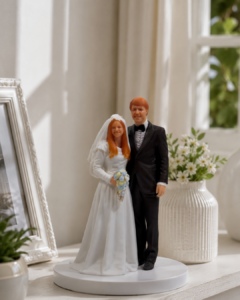
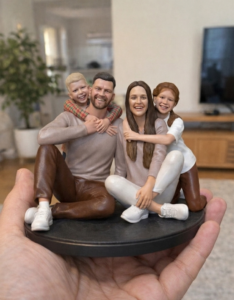
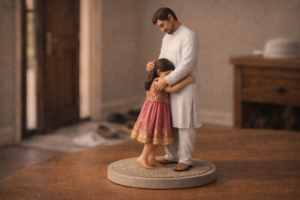
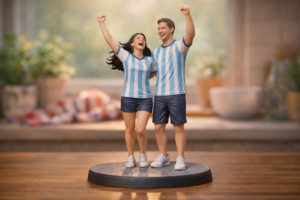
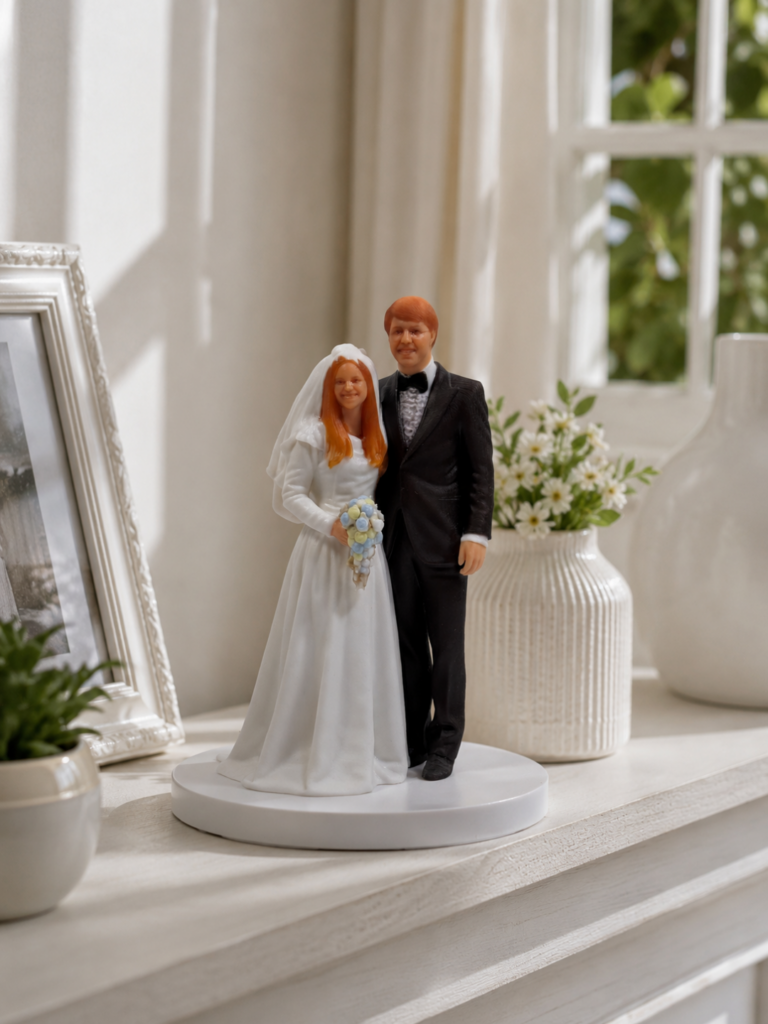
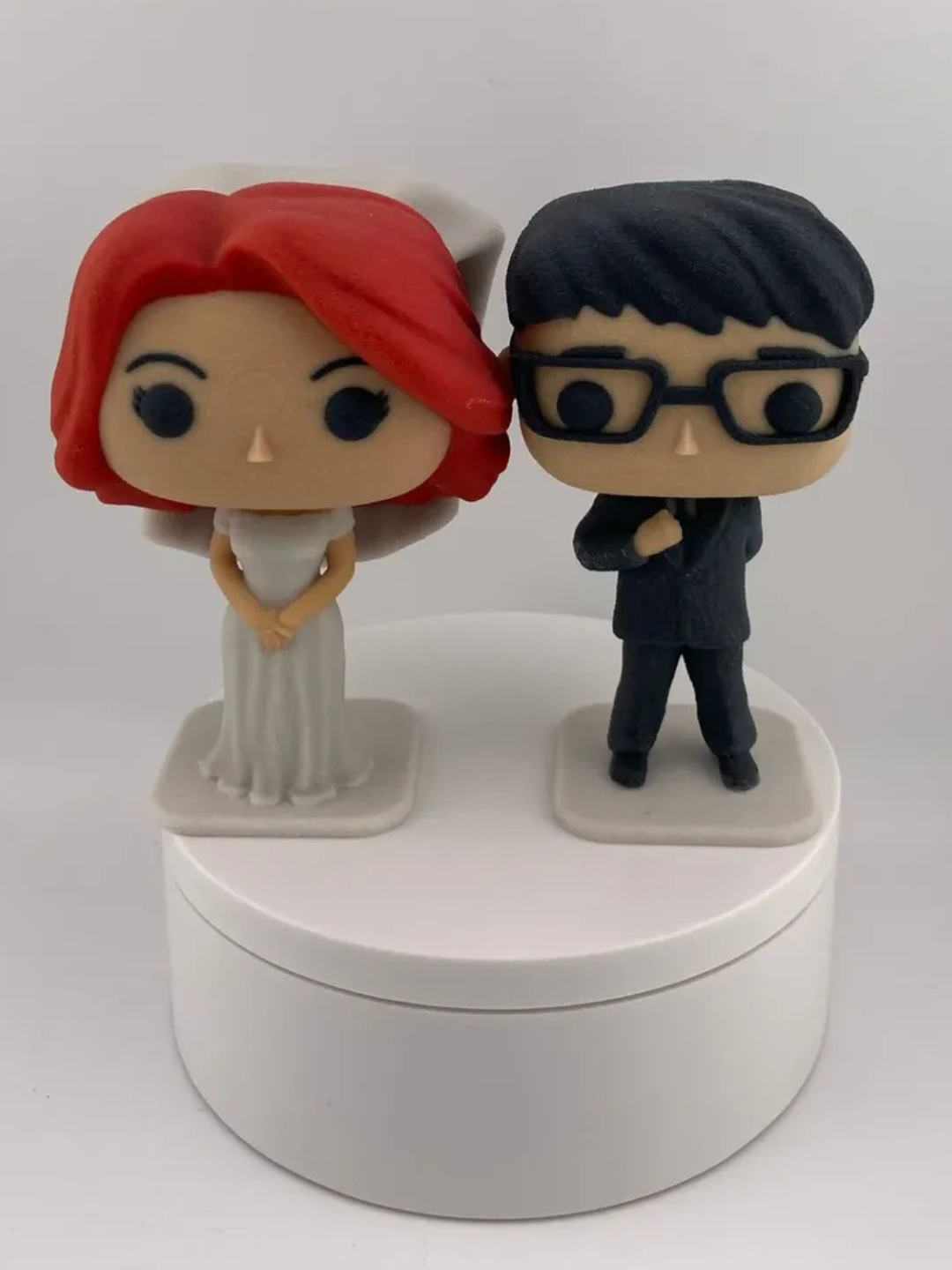
The3DMe creates full-color resin 3D figurines digitally sculpted from customer photos. The process involves manual sculpting , full-color rendering, and resin 3D printing that produces a level of detail and lifelike accuracy that generic decorative objects cannot approach. The result is not a holiday product. It is a representation of specific people, made with the craftsmanship required for that specificity to actually read.
Placed at the center of a July 4th table, a personalized family figurine Independence Day centerpiece does something that no star-spangled floral arrangement can do. It tells everyone who sits down that this table was set for them – that the host considered not just what the holiday looks like but who is actually being celebrated.
That is not sentiment in the abstract. It is a design decision with a visible impact. The table that has a custom figurine at its center is, definitionally, a table no one else in the country has. And that exclusivity – that assurance of originality – is exactly what the emerging fourth of July table decor trends are searching for.
The search language around America 250 party ideas reveals a consistent pattern. People are not looking for more patriotism. They are looking for smarter patriotism.
Queries growing in volume include:
What connects all of them: a desire to express genuine enthusiasm for a genuine occasion without defaulting to visual cliches that make every host’s table look like the same store’s floor plan.
The fourth of July table decor trends worth following this year are the ones that answer these searches – not the ones that feed the category they are trying to escape.
There is a practical difference between a July 4th gathering that happens and one that has a character.
Gatherings with character are built by hosts who make decisions – not just about what to serve, but about what the space should feel like and what belongs on the table. That consistency is what turns an annual cookout into something people genuinely look forward to.
The family July 4th tradition ideas that hold up over years share one quality: guests walk in looking for the specific things that make this celebration feel like this family’s celebration. A tablecloth that reappears every summer. A centerpiece that gets updated rather than replaced – a personalized family figurine Independence Day display with a new face added, a new pose, a new year captured in resin.
That kind of object does not signal nostalgia. It signals intent. Someone thought about this. Someone made a choice.
That is the difference between a tradition and an annual repeat.
Companies hosting client events or executive dinners around July 4, 2026 face the same identity gap individual hosts face – just at higher stakes.
Standard corporate patriotic gift ideas – branded mugs, logo merchandise, generic flag swag – communicate the same thing plastic tablecloths do at a home gathering: that someone bought something without making a decision.
The numbers make the cost of that visible. The global corporate gifting market was valued at $78 billion in 2023, projected to reach $169 billion by 2033. Companies spending at that scale should be getting more than a polite thank-you. The same research found that unique, personalized gifts produced 306% higher customer lifetime value compared to generic equivalents.
Custom 3D figurines from The3DMe occupy that gap directly. A figurine of a senior executive or client captured at an America 250 event is not a branded product – it is a representation of a specific person, crafted with enough detail to sit on a desk for years without looking like promotional material.
That is what a pen or a tote cannot communicate: this person was considered individually. And individual consideration is the foundation of every lasting corporate relationship.
These are design decisions, not product recommendations. Each one moves the table from a category purchase toward something specific.
There is something quietly counterintuitive about where the fourth of July table decor trends for 2026 are pointing.
The hosts setting the tables that stop guests are not the ones who spent the most at the party supply store. They are the ones who made the fewest decisions badly.
The flag is a shared symbol. The table is not. The holiday belongs to everyone. The way you celebrate it belongs to you.
In a year when America turns 250, the most powerful thing a host can bring to the table is not more decoration. It is a clearer sense of who is sitting around it. And it is what the one object at the center – specific, irreplaceable, impossible to find anywhere else – will say out loud from the moment the first guest walks in.
Start your order here or see the work for yourself on The3DMe Instagram.